
Beyond the Misconceptions: Debunking Common Engineering Myths About Maglev Turbo Blowers
Post time: 2026-09-17 14:13:08
When municipal project managers and plant engineering directors evaluate equipment upgrades, transitioning from legacy positive displacement Roots blowers to advanced turbomachinery represents a significant shift in plant architecture. Because high-speed direct-drive machinery relies on cutting-edge technologies like active magnetic bearings and permanent magnet synchronous motors, various technical misconceptions occasionally circulate within industrial circles.
Drawing from decades of specialized field engineering experience across municipal wastewater retrofits and heavy industrial processing plants, our technical teams have encountered numerous design myths. Separating field-proven engineering facts from outdated assumptions is essential for technical teams seeking reliable, high-efficiency plant operations. Let us examine and debunk the most common engineering misconceptions surrounding the maglev turbo blower.
Myth One: Magnetic Levitation Cannot Maintain Stability During Sudden Pressure Surges
A frequent concern among veteran plant operators is whether active magnetic bearings can maintain absolute shaft stability when aeration basins experience sudden backpressure spikes or rapid load shifts. The theoretical worry is that electromagnetic fields might struggle to react quickly enough to violent pneumatic transients.
The Engineering Reality of Closed-Loop Dynamics
In practice, modern maglev turbo blowers do not rely on passive static forces. High-resolution eddy-current sensors monitor the exact position of the rotating shaft tens of thousands of times per second. Dedicated digital signal processors calculate corrective voltage adjustments in microsecond intervals. When a pressure surge occurs, the control system instantly increases electromagnetic stiffness and damping parameters, neutralizing disturbances before physical displacement can occur. This active closed-loop responsiveness provides far greater stability than traditional mechanical bushings, which absorb shocks through destructive friction.
Myth Two: High-Speed Permanent Magnet Motors Suffer from Premature Electrical Burnout
Another persistent skepticism involves the operational longevity of high-speed permanent magnet motors running at rotational velocities scaling up to 100,000 RPM. Critics sometimes assume that continuous high-frequency switching will lead to rapid thermal degradation of the stator windings and internal magnets.
Advanced Thermal Management and Materials Science
While high-speed operation does generate significant electromagnetic and aerodynamic heat, modern engineering resolves this through rigorous thermal architecture. Tier-one maglev turbo blowers integrate direct liquid cooling jackets around the stator core and utilize precision-segmented magnet arrays protected by high-strength carbon-titanium sleeves. Furthermore, high-frequency variable frequency drives employ sophisticated pulse-width modulation strategies that minimize harmonic distortion, ensuring that electrical components operate well within safe thermal thresholds for decades of continuous service.
Myth Three: Zero-Oil Systems Lack Robustness in Continuous Heavy-Duty Cycles
Because traditional industrial machinery relies heavily on oil lubrication to cushion metal parts, some mechanical engineers express initial hesitation regarding completely oil-free, contactless levitation systems in demanding industrial environments.
Frictionless Longevity and Mechanical Simplicity
The absence of mechanical contact is actually the primary driver of superior longevity. Traditional oil-lubricated bearings suffer from continuous friction, viscous drag, and gradual wear that degrades performance over time. By eliminating physical bearings, gearboxes, and sliding seals entirely, a maglev turbo blower removes the root causes of mechanical fatigue. Without oil degradation or component wear, the machine maintains peak aerodynamic efficiency and volumetric output across years of uninterrupted 24/7 operation.
Frequently Asked Questions on Maglev Blower Engineering Realities
1. Do maglev turbo blowers require specialized electrical grid infrastructure?
Standard industrial power supplies are fully compatible. Modern maglev blowers integrate advanced harmonic filtering within their control cabinets to ensure clean electrical operation without disrupting other sensitive plant instrumentation.
2. How do engineers verify the structural integrity of high-speed rotors prior to installation?
Every high-speed rotor assembly undergoes rigorous overspeed spin testing in certified test cells, validating mechanical safety limits significantly beyond maximum operational velocities before dispatch to a client site.
3. What is the primary indicator that a maglev blower is operating at peak efficiency?
Continuous telemetry monitoring of motor frequency, bearing levitation current, and air mass flow provides real-time validation, confirming that the unit is operating cleanly within its optimal aerodynamic performance island.
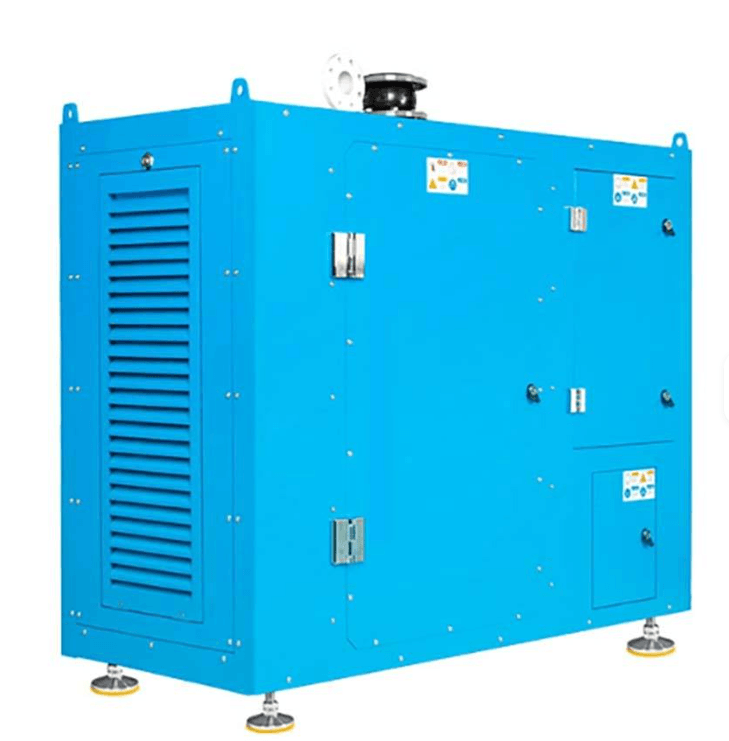
Maglev Turbo Blowers Product Information
Web: http://www.greentechblower.com (Group Web) ‖ http://www.zqblower.cn (Chinese) ‖ http://www.ringblower.cn/ (Ring blower) ‖ http://www.china-blower.com (Roots Blower) ‖ https://www.zibovacuumpump.com (Vacuum Pump)