
Pneumatic Conveying Mastery: Managing Transient Industrial Loads with Maglev Turbo Blowers
Post time: 2026-10-29 13:30:21
For industrial plant engineers, bulk material handling specialists, and pneumatic transport system designers, moving powdered or granular solids—such as cement, food-grade starches, chemicals, and plastic resins—requires reliable, high-pressure airflow. Unlike municipal wastewater aeration basins that experience relatively gradual biological demand shifts, pneumatic conveying networks operate in dynamic, high-friction environments. Sudden pipeline blockages, fluctuating solid-to-gas mass ratios, and abrupt pressure spikes constantly test the mechanical resilience and aerodynamic adaptability of air-delivery systems.
When legacy positive displacement blowers encounter sudden downstream flow resistance, they generate severe mechanical backpressure and pressure pulsations that stress piping headers and motor drives. Drawing from decades of frontline field engineering and pneumatic system integration across heavy manufacturing and processing plants, our technical teams have evaluated how advanced turbomachinery transforms bulk solid transport. Let us examine the engineering mechanics that allow modern maglev turbo blowers to excel under demanding transient pneumatic loads.
Engineering Resilient Pneumatic Conveying: Overcoming Transient Pressure Spikes
To maintain smooth, continuous material transport without clogging pipelines or damaging equipment, pneumatic conveying systems require blowers capable of instant adaptive modulation.
Handling Variable Solid-to-Gas Mass Ratios: Explaining how fluctuating material feed rates alter pipeline resistance and how rapid variable frequency drive response maintains stable conveying velocity without stalling.
Preventing Line Blockage and Pressure Surges: Detailing how high-speed turbo compression adapts to sudden downstream resistance without triggering damaging stall conditions or overheating internal components.
Eliminating Hydrocarbon Contamination in Bulk Food and Chemical Transport: Showcasing the absolute necessity of certified oil-free air delivery when conveying sensitive edible or reactive chemical powders where lubricant migration ruins entire product batches.
Expert Q&A: Optimizing Pneumatic Transport with Maglev Technology
Q1: How do maglev turbo blowers respond to sudden pressure spikes caused by material bunching in long conveying pipelines?
Answer: In pneumatic conveying, material accumulation or "slugging" can cause immediate, sharp increases in line backpressure. Traditional positive displacement blowers react by rigidly forcing volume against the obstruction, causing severe motor current spikes and mechanical vibration. In contrast, intelligent maglev turbo blowers utilize high-speed digital signal processors and rapid variable frequency drive modulation. When a pressure surge is detected via precision sensors, the system instantly adjusts rotational velocity and torque output to maintain stable airflow dynamics, riding through transient line restrictions safely without mechanical distress.
Q2: Why is oil-free air delivery critical for pneumatic conveying in food processing and pharmaceutical manufacturing?
Answer: Many bulk materials handled via pneumatic transport—such as flour, powdered sugar, pharmaceutical excipients, and fine chemicals—are highly sensitive to contamination. Legacy oil-lubricated blowers carry a persistent risk of oil aerosol migration into the compressed air stream, which coats pipeline interiors and contaminates the transported product. Maglev turbo blowers eliminate lubricating oils entirely through active magnetic levitation, guaranteeing Class 0 oil-free air purity and protecting sensitive products from hydrocarbon contamination.
Q3: How does the wide turndown capability of turbo blowers benefit facilities handling multiple grades of bulk materials?
Answer: Processing plants frequently switch between conveying light, fluffy powders and dense, heavy granular materials, which require vastly different airflow rates and pressure profiles. Blowers with narrow operating windows require manual pulley changes or cumbersome throttling valves. Maglev turbo blowers offer exceptional turndown flexibility, allowing plant operators to adjust operational setpoints digitally via the control panel to match the exact pneumatic requirements of each specific material batch.
Frequently Asked Questions on Pneumatic Conveying Integration
1. Can maglev turbo blowers achieve the high discharge pressures required for long-distance pneumatic transport?
Yes. Modern multi-stage or high-pressure ratio maglev turbo blowers are specifically engineered to deliver the elevated static pressures needed to overcome frictional losses in extended pipeline runs, making them fully compatible with dense-phase and dilute-phase pneumatic conveying systems.
2. How do variable ambient temperatures affect pneumatic conveying blower performance?
Changes in ambient temperature alter air density, which directly impacts mass flow and pressure generation in centrifugal compressors. Intelligent maglev blowers integrate automated barometric and temperature compensation algorithms that adjust motor frequency in real time, ensuring consistent conveying velocity regardless of seasonal weather shifts.
3. What routine maintenance is required for blowers operating in dusty bulk-handling environments?
Because active magnetic levitation eliminates mechanical friction and oil systems entirely, routine maintenance is streamlined to periodic inspections and replacement of multi-stage air intake filters, ensuring that airborne dust from the manufacturing plant floor never enters the high-speed compression core.
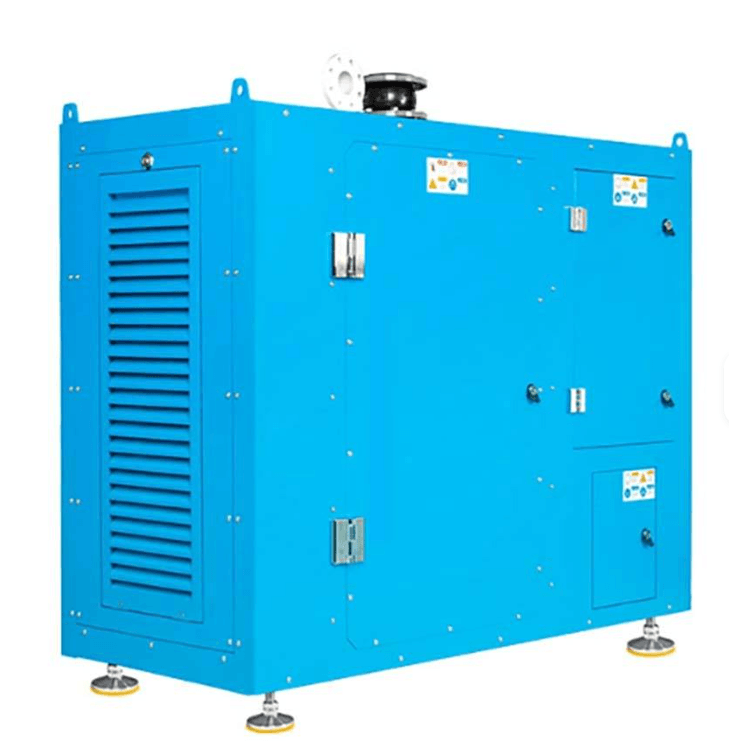
Maglev Turbo Blowers Product Information
Web: http://www.greentechblower.com (Group Web) ‖ http://www.zqblower.cn (Chinese) ‖ http://www.ringblower.cn/ (Ring blower) ‖ http://www.china-blower.com (Roots Blower) ‖ https://www.zibovacuumpump.com (Vacuum Pump)