
How to Select an Air Suspension Centrifugal Blower for Different Operating Conditions?
Post time: 2026-10-29 13:47:30
Air suspension centrifugal blowers offer advantages such as contact-free bearings, high energy efficiency, low noise, and lubrication-free operation. They are widely used in wastewater treatment, industrial manufacturing, food processing, cement, and building materials industries. However, different applications have different requirements for airflow, pressure, operating stability, and energy consumption. Selecting the right blower directly affects operating efficiency, service life, and overall costs.
1. Identify Key Parameters Before Selection
1.1 Determine the Required Airflow and Pressure
Airflow and pressure are the key parameters when selecting an air suspension centrifugal blower. Before making a selection, determine the required airflow, outlet pressure, and pipeline resistance. Factors such as filters, valves, and piping should also be considered.
The blower's rated performance should match actual operating requirements. Undersizing may result in insufficient airflow, while oversizing can increase initial investment and energy consumption.
1.2 Consider Gas Characteristics and Environmental Conditions
Gas temperature, humidity, dust concentration, and corrosive substances can all affect blower performance. For high-temperature, high-humidity, or corrosive environments, pay particular attention to material compatibility, inlet filtration, and protective design to ensure reliable long-term operation.
2. Selection Considerations for Different Operating Conditions
2.1 Wastewater Treatment: Focus on Continuous Aeration and Energy Savings
Wastewater treatment aeration systems typically require continuous blower operation. Oxygen demand varies with water quality, wastewater volume, and treatment stages. Therefore, airflow adjustment range, operating efficiency, and reliability are essential selection criteria.
For projects with fluctuating loads, consider models with variable-frequency control. Coordinated operation of multiple blowers can help deliver air according to actual demand and reduce long-term energy consumption.
2.2 Industrial Production: Ensure Pressure Matching and Operational Stability
Applications such as pneumatic conveying and industrial process air supply often require stable pressure and continuous airflow. Select a blower based on process pressure requirements, pipeline pressure losses, and the resistance of downstream equipment.
For production processes with frequent load changes, evaluate adjustment performance, control system response, and multi-blower coordination to prevent pressure fluctuations from affecting production quality.
2.3 Food and Pharmaceutical Industries: Prioritize Air Quality
Food processing and pharmaceutical applications often have strict requirements for air cleanliness. In addition to airflow and pressure, consider inlet filtration efficiency, equipment materials, and cleaning and maintenance requirements for air passages.
Air suspension bearings do not require conventional lubricating oil, reducing maintenance associated with lubrication systems. However, this does not automatically guarantee oil-free or clean air at the outlet. Appropriate filtration and air treatment equipment must still be selected according to process requirements.
2.4 High-Dust and Special Environments: Strengthen Protective Design
Industries such as cement and building materials may involve high dust concentrations, elevated temperatures, and demanding operating conditions. Selection should focus on inlet filtration, heat dissipation, electrical protection ratings, and maintenance accessibility.
For corrosive gases or special media, qualified professionals should verify material compatibility and equipment suitability to prevent performance degradation and equipment failure.
3. What Other Factors Should Be Considered?
3.1 Evaluate Life-Cycle Costs
Purchase price is not the only indicator of a blower's economic value. Compare energy consumption, maintenance expenses, spare parts costs, downtime losses, and expected service life. For projects operating continuously, energy consumption is often a major component of total ownership costs.
3.2 Verify Performance Curves and Adjustment Range
Request performance curves for the actual operating conditions. Check efficiency at different airflow and pressure points and confirm that the blower can operate reliably within the normal operating range. Also consider standby equipment, automatic controls, and future capacity expansion.
4. Conclusion
Selecting an air suspension centrifugal blower should not be based solely on motor power or a single parameter. Airflow, pressure, gas characteristics, load fluctuations, and operating costs must all be considered. Accurate operating-condition calculations, proper model matching, and an appropriate control strategy help maximize energy savings while improving system reliability and economic performance.
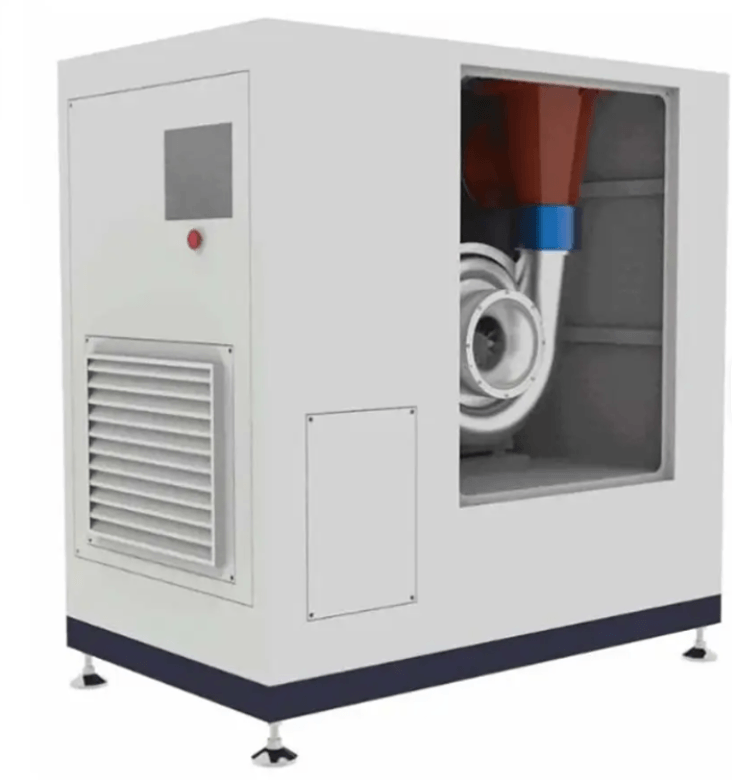
Air Suspension Blowers Product Information
Web: http://www.greentechblower.com (Group Web) ‖ http://www.zqblower.cn (Chinese) ‖ http://www.ringblower.cn/ (Ring blower) ‖ http://www.china-blower.com (Roots Blower) ‖ https://www.zibovacuumpump.com (Vacuum Pump)