
Engineering Resilience: How Maglev Turbo Blowers Maintain Peak Performance in Extreme Climates and H
Post time: 2026-09-16 13:46:05
When industrial equipment manufacturers test machinery under controlled laboratory conditions, performance curves are predictable, and operational variables remain neatly bounded. However, real-world industrial and municipal installations rarely operate in pristine indoor facilities. From freezing winter wastewater treatment plants situated in sub-arctic regions to remote mining processing facilities operating at high-altitude elevations with thin barometric pressure, heavy-duty machinery faces punishing environmental extremes.
For plant engineers and project directors overseeing installations in harsh geographies, equipment reliability is the ultimate metric of success. When conventional blowers encounter sub-zero temperatures, high humidity, or severe barometric drops, mechanical components frequently succumb to lubrication thickening, thermal shock, and efficiency loss. Drawing from extensive field engineering experience across diverse global climates, our technical teams have observed how direct-drive magnetic levitation technology redefines operational resilience. To understand why modern industrial operators rely on maglev turbo blowers in the most challenging terrain, we must examine how advanced engineering overcomes extreme environmental stressors.
Overcoming Barometric and Air Density Challenges at High-Altitude Sites
Operating fluid machinery at high elevations introduces immediate thermodynamic hurdles. As altitude increases, barometric pressure and ambient air density decrease significantly, reducing the mass flow of oxygen delivered per revolution by standard compressors.
Automated Mass Flow Compensation for Thin Air
In high-altitude municipal wastewater treatment plants, legacy blowers often struggle to deliver sufficient oxygen mass to biological basins because volumetric displacement drops as air thins. Advanced maglev turbo blowers integrate smart control algorithms that monitor local barometric pressure and ambient temperature in real time, automatically modulating variable frequency drive output to increase rotational speed and compensate for air density shifts, ensuring consistent biological oxygen delivery.
Protecting Impeller Aerodynamics Under Low-Pressure Ratios
Thin air alters the incidence angles and Mach number thresholds across centrifugal compressor impellers. By utilizing precision-forged titanium 3D-contoured impellers and wide-margin aerodynamic volutes, maglev turbo blowers prevent boundary layer separation and localized stall, maintaining stable compression efficiency even when operating in high-elevation mountain terrain.
Thermal and Mechanical Defense Against Sub-Zero and Humid Operating Extremes
Extreme weather imposes severe physical stresses on blower enclosures, electrical cabinets, and internal mechanical assemblies, threatening continuous 24/7 operation.
Enclosure Climate Control and Condensation Prevention
In freezing outdoor industrial yards or humid coastal wastewater lagoons, rapid temperature swings can cause moisture condensation inside electrical cabinets, risking short circuits or variable frequency drive failures. Modern containerized and cabinet-enclosed maglev systems feature intelligent thermal management, including automated internal space heaters, louvered intake pre-heating, and sealed IP-rated electrical compartments that maintain pristine micro-climates regardless of external weather extremes.
Corrosion-Resistant Metallurgy for Harsh Industrial Atmospheres
Chemical processing plants and coastal wastewater facilities expose equipment to aggressive salt spray, hydrogen sulfide, and corrosive industrial fumes. To prevent structural degradation, high-reliability maglev turbo blowers utilize specialized protective coatings on volute housings, anodized cooling channels, and marine-grade stainless steel fasteners, ensuring long-term structural integrity in corrosive environments.
Why Contactless Magnetic Levitation Guarantees Uninterrupted Survival in Harsh Terrain
The fundamental mechanical architecture of magnetic levitation provides inherent operational advantages that make it uniquely suited for severe environments where traditional machinery fails.
Eliminating Cold-Start Lubrication Failure
In sub-zero winter conditions, conventional oil-lubricated bearings suffer from thickened, viscous oil that impedes smooth startup, increases starting torque, and causes heavy metal-on-metal friction until the system warms up. Active magnetic bearings require zero lubrication, allowing a maglev turbo blower to start instantly and smoothly at absolute zero operating temperatures without pre-heating or mechanical wear.
Autonomous Self-Healing and Digital Fault Ride-Through
Remote industrial sites often experience unstable electrical grids and sudden voltage sags caused by severe storms. Intelligent digital controllers equipped with uninterrupted power supply ride-through capabilities and autonomous vibration damping algorithms protect the spinning rotor from grid disturbances, ensuring the machine stabilizes automatically or executes a controlled, safe shutdown without human intervention.
Frequently Asked Questions on Operating Blowers in Harsh Environments
1. How do sub-zero winter temperatures affect the startup reliability of maglev blowers?
Because active magnetic levitation relies entirely on electromagnetic fields rather than liquid lubricants, freezing temperatures do not impact bearing viscosity or startup mechanics, ensuring immediate, friction-free operation on demand.
2. Can maglev turbo blowers operate reliably in high-humidity tropical or coastal climates?
Yes. Sealed electronic cabinets, specialized anti-corrosion coatings, and integrated condensation management systems protect internal power electronics and magnetic sensors from moisture damage in humid coastal regions.
3. What special maintenance is required for blowers operating in high-dust industrial environments?
While internal mechanical components require no maintenance due to contactless levitation, operators must utilize heavy-duty, multi-stage inlet air filtration packages to prevent airborne particulate accumulation in dusty or sandy industrial sectors.
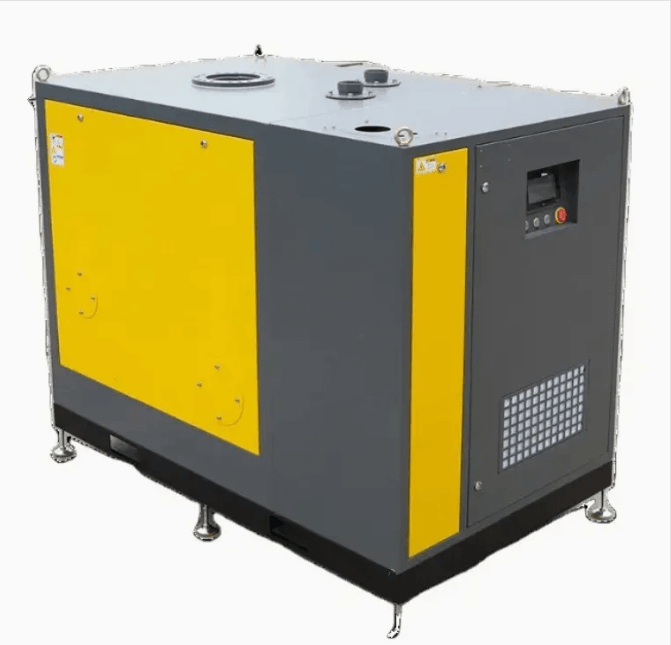
Maglev Turbo Blowers Product Information
Web: http://www.greentechblower.com (Group Web) ‖ http://www.zqblower.cn (Chinese) ‖ http://www.ringblower.cn/ (Ring blower) ‖ http://www.china-blower.com (Roots Blower) ‖ https://www.zibovacuumpump.com (Vacuum Pump)