
Beyond the Impeller: Decoding the Electrical and Thermal Architecture of Maglev Turbo Blowers
Post time: 2026-08-26 15:22:07
When industrial plants upgrade their pneumatic conveyance or wastewater aeration lines, discussions typically center on flow rates, pressure ratios, and mechanical efficiency. Yet, for an engineering consultant or plant electrical director, the true reliability of a high-speed turbo machine is determined inside the motor housing and inverter cabinet.
Modern maglev turbo blowers rely on permanent magnet synchronous motors (PMSM) driven by advanced high-frequency variable frequency drives (VFDs). While this direct-drive architecture eliminates gearboxes and mechanical transmission losses, it introduces a complex coupling of electromagnetic fields, high-frequency switching harmonics, and severe thermal density. To understand why certain turbo blowers maintain multi-year uptime in harsh industrial environments while others suffer from premature insulation breakdown, we must analyze how engineering teams master this thermal-electrical frontier.
What Happens When High-Frequency Switching Meets Permanent Magnet Rotors?
Operating a motor at fundamental frequencies reaching several hundred hertz requires ultra-fast switching in the VFD, typically utilizing wide bandgap semiconductor materials like silicon carbide (SiC). However, this high dv/dt switching creates side effects that traditional induction motor designs never encounter.
High-Order Harmonic Generation: Rapid pulse-width modulation (PWM) voltage steps generate significant harmonic currents. These high-frequency currents do not contribute to useful shaft torque; instead, they circulate through the stator windings as parasitic losses, accelerating thermal aging.
Proximity and Skin Effects: At high frequencies, alternating current refuses to utilize the entire cross-section of copper conductors, crowding toward the outer edges. Specialized litz wire configurations and transposed strand designs are mandatory to prevent localized hot spots within the stator slots.
Electromagnetic Compatibility (EMC) Challenges: Unsuppressed high-frequency common-mode voltages can induce shaft currents that arc across precision components if grounding and shielding topologies are improperly engineered.
How Do Engineers Prevent Eddy Current Heating in High-Speed Rotor Cores?
Because the permanent magnets are mounted directly on or within the high-speed rotor assembly, they rotate through a non-sinusoidal spatial magnetic field laced with time-harmonic ripples from the inverter.
Rotor Surface Losses: Time-varying magnetic fields penetrate the conductive sleeve and magnet materials, inducing localized eddy currents. Without proper mitigation, these eddy currents generate intense internal heat that can threaten the demagnetization threshold of high-grade neodymium-iron-boron (NdFeB) or samarium-cobalt magnets.
Segmented Magnet Arrays: To break the path of induced circular currents, modern high-speed rotors utilize axially or circumferentially segmented magnet tiles separated by high-resistivity insulation barriers.
Advanced Shielding Sleeves: High-strength carbon fiber or titanium retention sleeves are precision-fitted over the magnet assembly. Beyond providing the mechanical hoop strength required at extreme rotational velocities, these sleeves act as thermal and electromagnetic buffers for the core.
Why Is Integrated Liquid and Air Thermal Management Critical for Compact Footprints?
Because maglev turbo blowers pack hundreds of kilowatts of electromagnetic power into a remarkably compact enclosure, passive air cooling is insufficient for continuous heavy-duty operation.
Stator Hot-Spot Elimination: The highest thermal density occurs in the stator end-turns and slot liners. Direct liquid cooling jackets, engineered with optimized internal fluid turbulence, extract heat directly from the stator core periphery before it can migrate toward the magnetic bearings.
Thermal Isolation of Sensitive Electronics: While the motor stator handles high temperatures, the digital control boards, displacement sensor drivers, and power electronics must operate within strict thermal boundaries. Intelligent physical partitioning and dedicated thermal barriers prevent heat soak from the compressor volute into the control cabinet.
Real-Thermal Monitoring Integration: Rather than relying solely on estimated mathematical models, embedded RTDs and fiber-optic temperature sensors monitor winding and bearing cavity temperatures in real time, allowing the VFD control algorithm to dynamically derate or adjust cooling capacity during extreme ambient heat spikes.
Frequently Asked Questions on Maglev Motor Design
1. How does the VFD frequency impact overall system efficiency?
Higher switching frequencies reduce current ripple and audible noise, but they increase switching losses within the inverter semiconductors. Achieving optimal efficiency requires balancing pulse frequency with advanced modulation strategies to minimize total harmonic distortion without overheating the motor core.
2. Can standard industrial cables be used between the VFD and the maglev blower?
No. Due to high-frequency reflection phenomena and standing wave effects caused by rapid voltage spikes, specialized armored EMC cables with low capacitance and complete 360-degree shield termination are essential to prevent electromagnetic interference with plant instrumentation.
3. How do thermal transients affect magnetic bearing calibration?
Thermal expansion alters minute air gaps between the rotor and stator, as well as the calibration curves of eddy-current sensors. High-end maglev systems incorporate automated thermal compensation routines within the digital signal processor to maintain absolute levitation stability across all seasonal operating temperatures.
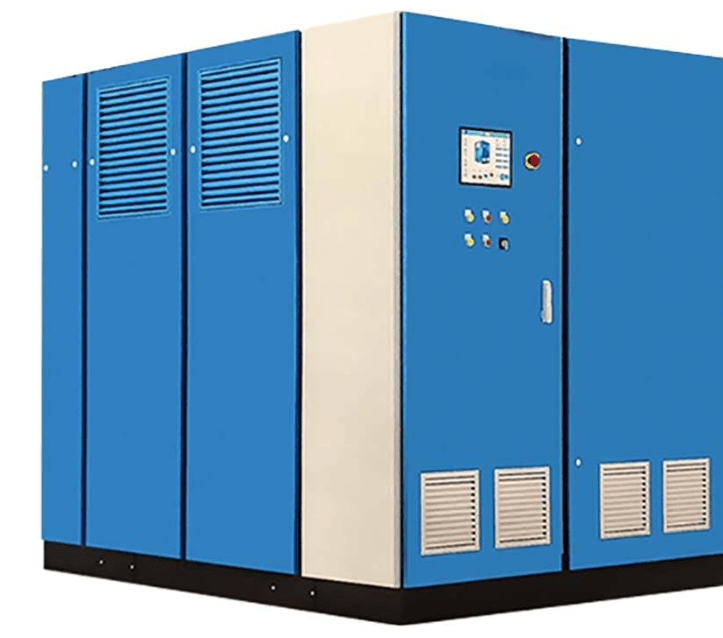
Maglev Turbo Blowers Product Information
Web: http://www.greentechblower.com (Group Web) ‖ http://www.zqblower.cn (Chinese) ‖ http://www.ringblower.cn/ (Ring blower) ‖ http://www.china-blower.com (Roots Blower) ‖ https://www.zibovacuumpump.com (Vacuum Pump)