
ZLD System Engineering: Maximizing High-Salinity Evaporation Efficiency with Maglev Turbo Compressor
Post time: 2026-11-04 13:45:59
For industrial plant directors, chemical process engineers, and environmental compliance managers, achieving true Zero Liquid Discharge (ZLD) represents the pinnacle of sustainable manufacturing and water stewardship. In advanced industrial sectors—such as coal chemical processing, lithium extraction, pharmaceutical synthesis, and semiconductor manufacturing—discharging high-salinity wastewater is strictly prohibited by modern environmental regulations. Consequently, facilities must deploy high-efficiency evaporation and crystallization systems to separate concentrated brines into pure distillate water and solid crystalline salt byproducts.
However, thermal evaporation processes are traditionally energy-intensive, requiring massive inputs of steam or electrical power. When engineering teams set out to minimize operational energy consumption, Mechanical Vapor Recompression (MVR) systems utilizing high-speed turbo compressors emerge as the gold standard. Drawing from decades of frontline field commissioning, thermal system integration, and corrosive fluid handling experience across global industrial sites, our technical teams have evaluated how advanced turbomachinery transforms ZLD performance. Let us examine the engineering principles and thermal strategies that allow industrial maglev turbo compressors to achieve exceptional efficiency in high-salinity evaporation.
Advancing Zero Liquid Discharge: Thermal Engineering in High-Salinity Evaporation
Operating an industrial evaporation crystallizer requires continuous, stable vapor handling to recycle latent heat and maintain uniform boiling kinetics across multi-effect or single-effect evaporator vessels.
Latent Heat Recycling Dynamics: Explaining how high-speed maglev turbo compressors draw secondary steam vapor from the evaporator vessel, raise its enthalpy via adiabatic compression, and inject it back into the calandria shell as clean heating steam, drastically cutting primary energy consumption.
Resisting Aggressive Brine Aerosols: Detailing specialized anti-corrosion titanium metallurgy and advanced surface nano-coatings designed to withstand aggressive, moisture-laden saline vapor environments and droplet impingement.
Sustaining High Enthalpy Transfer Rates: Evaluating how precise rotational speed control maintains constant evaporation temperature differentials and compensates for boiling point elevation across continuous industrial crystallization cycles.
Expert Q&A: Master Class in MVR Turbo Compression for ZLD Plants
Q1: How do maglev turbo vapor compressors handle boiling point elevation in high-concentration brine solutions?
Answer: As wastewater evaporates and brine concentration increases toward saturation, the solution's boiling point rises significantly—a phenomenon known as boiling point elevation (BPE). In legacy systems, this increase in thermal resistance causes severe compressor choking or thermal efficiency drop-offs. Modern maglev turbo compressors utilize high-velocity 3D titanium impellers and rapid variable frequency drive modulation. By dynamically adjusting rotational speed in response to real-time temperature and pressure sensors, the compressor increases pressure ratios smoothly, overcoming boiling point elevation while maintaining stable vapor mass flow across the evaporator.
Q2: Why is oil-free technology mandatory for vapor recompression in pharmaceutical and chemical ZLD systems?
Answer: In traditional gear-driven vapor compressors, lubricating oil circulates near high-temperature mechanical seals and bearing housings. If oil mist migrates into the compressed steam circuit, it contaminates the calandria heating surfaces and mixes directly into the condensed distillate water, ruining water purity standards and fouling heat transfer coefficients. Certified oil-free maglev turbo compressors eliminate lubricating oils entirely through active magnetic suspension, ensuring absolute condensate purity and protecting delicate evaporator tube bundles from hydrocarbon fouling.
Q3: What energy efficiency gains can industrial plants expect when retrofitting legacy roots-type vapor compressors with maglev turbos?
Answer: Legacy positive displacement roots compressors suffer from internal mechanical friction, oil drag, and limited volumetric efficiency under high-pressure ratios. Retrofitting these legacy units with direct-drive, frictionless maglev turbo compressors typically slashes total electrical energy consumption for evaporation by thirty to fifty percent. By replacing mechanical friction with controlled magnetic fields, facilities achieve exceptional specific energy consumption metrics per ton of evaporated water.
Frequently Asked Questions on ZLD Vapor Compression Integration
1. How do variable feed water salinity levels impact the operational stability of maglev vapor compressors?
Industrial wastewater inflow frequently fluctuates in chemical composition and total dissolved solids (TDS). Intelligent maglev turbo compressors integrate automated multi-variable control algorithms that monitor vapor density and suction pressure continuously, adjusting compressor speed instantly to absorb feed variations without triggering surge conditions.
2. What routine maintenance is required for vapor compressors operating in aggressive saline vapor environments?
Because active magnetic levitation eliminates mechanical contact, gearboxes, and oil lubrication systems entirely, routine maintenance is streamlined. Operational protocols focus primarily on periodic compressor washdown cycles (using condensate spray nozzles) to prevent mineral scaling on impeller blades, ensuring pristine aerodynamic performance.
3. Can maglev turbo compressors be integrated into existing multi-effect evaporation (MEE) retrofits?
Yes. Plant engineers can integrate high-efficiency maglev turbo vapor compressors into existing multi-effect evaporation trains to boost thermal performance, repurposing secondary vapor streams and significantly reducing the facility's reliance on external boiler steam supply.
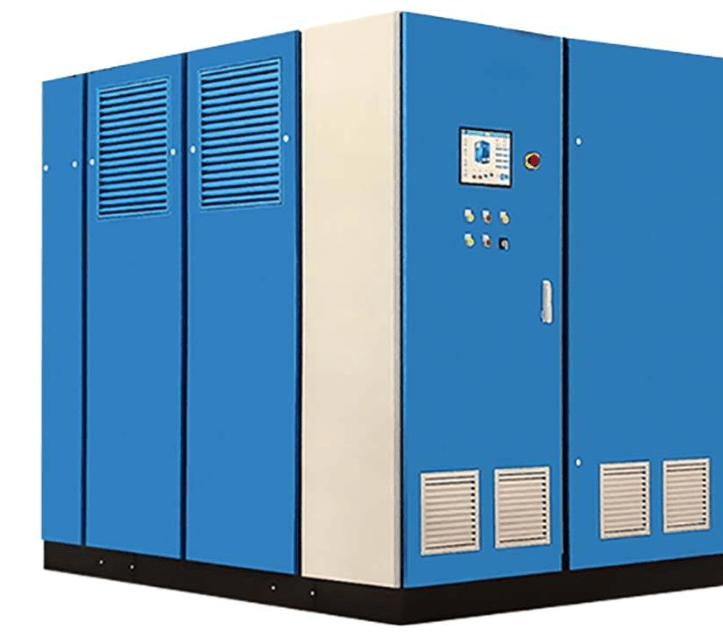
Maglev Turbo Blowers Product Information
Web: http://www.greentechblower.com (Group Web) ‖ http://www.zqblower.cn (Chinese) ‖ http://www.ringblower.cn/ (Ring blower) ‖ http://www.china-blower.com (Roots Blower) ‖ https://www.zibovacuumpump.com (Vacuum Pump)