
FGD System Optimization: Deploying Maglev Turbo Blowers in Power Plant Desulfurization Oxidation Bas
Post time: 2026-11-03 10:55:55
For thermal power generation facility engineers, heavy industrial energy directors, and environmental compliance managers, wet Flue Gas Desulfurization (FGD) systems are critical asset installations. Within limestone-gypsum wet scrubbing processes, oxidation aeration blowers perform an indispensable role: delivering continuous, high-volume atmospheric air into deep absorber slurry tanks to oxidize calcium sulfite into industrial-grade synthetic gypsum ($CaSO_4 cdot 2H_2O$).
However, wet FGD oxidation environments present severe operational hurdles for conventional aeration machinery. Blower systems must continuously operate against high, variable slurry head backpressures while enduring heavy chemical particulate exposure, high humidity, and abrasive ambient conditions. Drawing from decades of frontline commissioning, process engineering, and heavy industrial fluid handling experience, our technical teams have evaluated how modern high-speed turbomachinery transforms scrubber performance. Let us examine the technical strategies and mechanical advantages of deploying industrial maglev turbo blowers within power plant desulfurization environments.
Wet Scrubbing Process Engineering: Overcoming High-Backpressure Aeration Challenges
Ensuring complete chemical oxidation within deep limestone absorber basins requires blower systems capable of delivering stable mass flow against extreme dynamic liquid heads without experiencing thermal strain or mechanical wear.
Sustaining High Hydrostatic Head Delivery: Explaining how high-pressure-ratio 3D titanium impellers maintain stable static discharge pressures required to penetrate deep, high-density gypsum slurry columns without severe performance attenuation.
Accelerating Sulfite Oxidation Reaction Rates: Demonstrating how steady, pulsation-free compressed air distribution optimizes gas-liquid contact efficiency, ensuring complete chemical conversion and preventing unoxidized sulfite buildup in scrubber basins.
Resisting Aggressive Chemical and Dust Exposure: Detailing how sealed motor housings and specialized multi-stage intake filtration packages isolate high-speed rotating elements from ambient sulfurous fumes and abrasive coal ash particulates.
Expert Q&A: Master Class in FGD Oxidation Aeration
Q1: How do maglev turbo blowers overcome the extreme liquid backpressure common in deep FGD absorber tanks?
Answer: Wet desulfurization absorber tanks often feature slurry liquid depths exceeding six to eight meters, creating dense hydrostatic backpressure. Legacy positive displacement blowers struggle with high thermal buildup under continuous high-pressure service, while multi-stage centrifugal blowers risk approaching their instability limits when slurry levels shift. Modern maglev turbo blowers utilize high-velocity 3D-contoured impellers and high-efficiency permanent magnet synchronous motors controlled by fast-acting variable frequency drives. This enables the machine to dynamically raise discharge pressure while maintaining stable mass flow output, penetrating deep slurry columns reliably under shifting liquid head conditions.
Q2: Why is pulse-free continuous airflow essential for preventing aeration nozzle clogging in limestone slurry?
Answer: Slurry aeration headers utilize perforated pipe grids immersed in heavy mineral fluids. Legacy gear-driven blowers produce pressure pulsations that cause cyclic back-siphoning of gypsum slurry into the air distribution nozzles during low-pressure wave troughs, leading to severe scaling and nozzle blockages over time. Maglev turbo blowers generate a completely smooth, continuous aerodynamic discharge flow. This continuous positive pressure stream prevents slurry migration into the distribution grid, eliminating nozzle fouling and reducing costly scrubber maintenance shutdowns.
Q3: What operational cost advantages do maglev blowers offer over traditional oxidation air compressors in 24/7 power plant service?
Answer: Wet FGD systems in coal-fired and industrial power plants operate continuously on a 24/7 basis throughout the year. Upgrade retrofits replacing traditional liquid-ring compressors or roots blowers with direct-drive maglev turbo blowers routinely achieve energy savings of twenty to thirty percent. By eliminating mechanical gear friction, belt losses, and parasitic drag through active magnetic suspension, facilities significantly reduce auxiliary power consumption, directly lowering power plant heat rates and operational expenditures.
Frequently Asked Questions on Power Plant FGD Blower Retrofits
1. How do maglev turbo blowers perform when coal-fired power boilers execute rapid load-following modulations?
Modern power plants frequently ramp electrical output up and down to balance grid supply. As boiler load shifts, flue gas volume and sulfur dioxide mass flux fluctuate accordingly. Maglev turbo blowers feature wide turn-down ranges and rapid variable frequency drive response times, allowing the master SCADA controller to modulate oxidation air supply instantly to match fluctuating sulfur dioxide conversion requirements.
2. What protective measures prevent gypsum slurry backflow into the blower during emergency trip events?
System installations incorporate automated rapid-closing check valves combined with high-speed electronic blow-off valves positioned on the main discharge header. In the event of a plant electrical blackout, these mechanical and digital safety barriers close instantly, preventing heavy mineral slurry from siphoning backward into the blower casing.
3. Are specialized materials required for blower components operating in power plant desulfurization halls?
Because desulfurization buildings contain ambient moisture and mild acid gas traces, internal blower structural housings are treated with anti-corrosion marine-grade coatings, while all high-speed rotating parts, including the 3D-contoured impeller, are precision-machined from high-strength forged titanium or specialized stainless alloys for maximum chemical resilience.
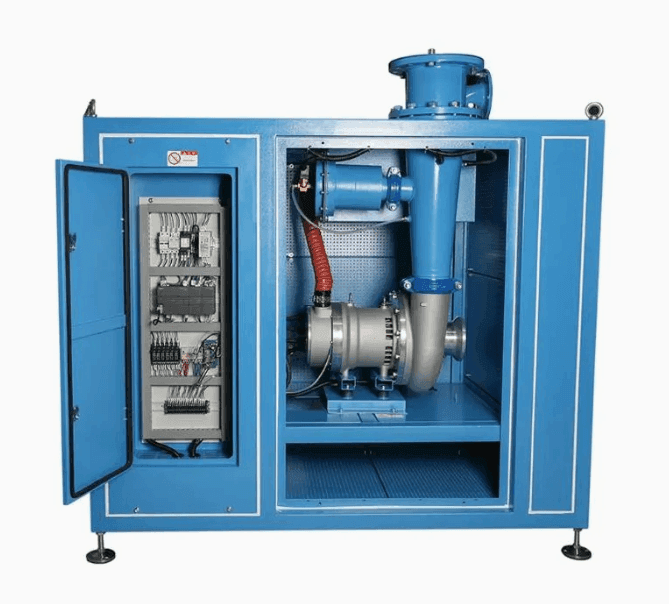
Maglev Turbo Blowers Product Information
Web: http://www.greentechblower.com (Group Web) ‖ http://www.zqblower.cn (Chinese) ‖ http://www.ringblower.cn/ (Ring blower) ‖ http://www.china-blower.com (Roots Blower) ‖ https://www.zibovacuumpump.com (Vacuum Pump)