
Harnessing Edge AI: Predictive Health Analytics in Maglev Turbo Blowers
Post time: 2026-10-30 13:43:01
For plant reliability engineers, maintenance managers, and industrial automation directors, unexpected equipment downtime represents the single greatest threat to operational continuity and budget control. In continuous-duty industrial environments like municipal wastewater treatment plants and chemical processing facilities, traditional maintenance strategies have relied heavily on reactive repairs or fixed calendar-based overhauls. However, waiting for a machine to fail or replacing components prematurely based on rigid schedules is both costly and inefficient.
As industrial plants embrace the digital transformation of Industry 4.0, advanced turbomachinery is entering a new era of self-awareness. By embedding artificial intelligence and machine learning algorithms directly into the local control architecture, modern systems can anticipate operational anomalies long before they manifest as physical faults. Drawing from decades of frontline field engineering, control system programming, and maintenance optimization experience across global industrial sites, our technical teams have pioneered edge intelligence capabilities. Let us examine how AI-driven predictive health analytics redefine reliability for industrial maglev turbo blowers.
The Evolution of Maintenance: From Reactive Repairs to Edge Intelligence
Integrating artificial intelligence at the edge—directly within the blower's local microprocessors—brings unprecedented analytical power to the point of operation.
Real-Time Sub-Micron Anomaly Detection: Advanced edge processors analyze thousands of telemetry data points per second from eddy-current displacement sensors and stator thermal probes, detecting minute harmonic shifts instantly.
Dynamic Baseline Machine Learning: Instead of relying on static alarm thresholds, onboard AI models learn the specific behavioral baseline of the plant's operating environment, adapting seamlessly to seasonal temperature and load variations.
Proactive Health Indexing: Continuous algorithmic scoring evaluates the composite health index of the magnetic bearings, power electronics, and high-speed motor, providing plant technicians with clear, actionable maintenance insights.
Expert Q&A: Edge AI Diagnostics in Maglev Turbo Blower Operations
Q1: How do edge computing algorithms detect micro-vibrations and rotor imbalances before physical wear occurs?
Answer: Traditional vibration monitoring relies on fixed trip limits that trigger an alarm only after a mechanical fault has already developed. In contrast, edge AI algorithms continuously track high-resolution shaft displacement data from active magnetic bearing gap sensors. By applying advanced spectral analysis at the local controller level, the system identifies subtle frequency harmonics and micro-vibration patterns associated with transient aerodynamic disturbances or minor unbalance, alerting operators weeks before any mechanical contact or performance drift can occur.
Q2: What is the operational advantage of local edge intelligence over cloud-only telemetry systems?
Answer: While cloud analytics platforms provide excellent macro-level historical trending and fleet-wide comparisons across multiple facilities, they depend on stable internet connectivity and introduce network latency. Edge intelligence processes critical safety and diagnostic telemetry locally inside the blower control cabinet in real time. This ensures that instantaneous anomaly detection and adaptive damping adjustments occur within milliseconds, operating securely and autonomously even if plant-wide network connectivity is temporarily disrupted.
Q3: How do machine learning models prevent false alarms caused by temporary industrial power fluctuations?
Answer: Industrial facilities frequently experience minor electrical noise, voltage dips, or abrupt load shifts that can trigger false alarms in legacy control systems. Onboard machine learning models are trained to differentiate between benign transient electrical noise and genuine mechanical or aerodynamic anomalies. By analyzing multi-variable correlation patterns—such as simultaneous shifts in motor frequency, bearing currents, and air mass flow—the AI filters out false positives, ensuring that maintenance teams only respond to verified operational events.
Frequently Asked Questions on AI-Driven Blower Diagnostics
1. Can edge AI diagnostic modules be integrated into existing installed maglev turbo blowers?
Yes. For facilities operating compatible digital control architectures, firmware upgrades and modular edge-processing gateways can be integrated during scheduled maintenance windows, bringing advanced predictive analytics to existing machinery without requiring hardware replacement.
2. How do plant maintenance teams access predictive health insights generated by the edge controller?
Predictive health metrics, component wear indexes, and early warning diagnostic alerts are transmitted securely via standard industrial communication protocols (such as Modbus TCP or OPC UA) directly to the central plant SCADA control room or authorized mobile engineering dashboards.
3. What specialized training is required for plant technicians to interpret AI-generated maintenance recommendations?
Edge AI systems are engineered to translate complex telemetry data into clear, intuitive operational guidance. Instead of raw data streams, the system provides actionable recommendations—such as scheduling a routine air filter inspection or verifying electrical grounding—allowing standard plant maintenance personnel to execute proactive care with ease.
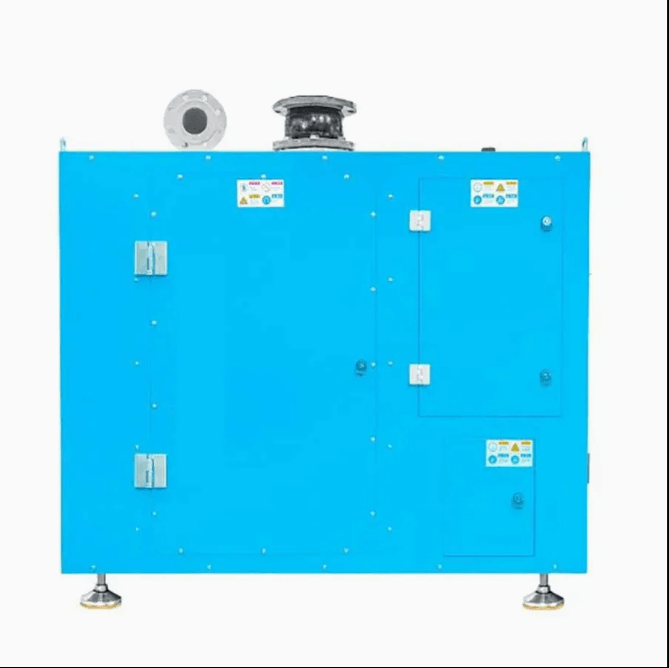
Maglev Turbo Blowers Product Information
Web: http://www.greentechblower.com (Group Web) ‖ http://www.zqblower.cn (Chinese) ‖ http://www.ringblower.cn/ (Ring blower) ‖ http://www.china-blower.com (Roots Blower) ‖ https://www.zibovacuumpump.com (Vacuum Pump)