
What Are the Effects of Oversizing an Air Suspension Centrifugal Blower?
Post time: 2026-10-30 14:09:03
Air suspension centrifugal blowers are widely used in wastewater treatment, industrial air supply, pneumatic conveying, and other applications due to their high energy efficiency, low noise, contact-free bearings, and convenient maintenance. During equipment selection, some users prefer to choose a larger blower to ensure sufficient airflow and pressure capacity. However, bigger is not always better when it comes to air suspension centrifugal blowers. Oversizing the equipment can increase initial investment costs and negatively affect operating efficiency and service life. So, what problems can arise from selecting an oversized air suspension centrifugal blower?
1. Increased Equipment Purchase and Operating Costs
1.1 Higher Initial Purchase Costs
Larger blower models generally require higher motor power, larger impellers, and more advanced supporting control systems, resulting in higher purchase prices. If the actual air demand is relatively low, selecting an oversized blower can lead to unnecessary investment in excess capacity.
1.2 Potential Increase in Electricity Consumption
Air suspension centrifugal blowers typically regulate airflow and pressure by adjusting rotational speed. When an oversized blower operates under low-load conditions for extended periods, its operating point may deviate from the high-efficiency range. This can increase energy consumption per unit of airflow and raise long-term electricity costs.
2. Reduced Blower Operating Efficiency
2.1 Operating Outside the High-Efficiency Range
Every air suspension centrifugal blower has its own performance curve and high-efficiency operating range. If the selected blower is too large, the actual operating airflow may differ significantly from its rated conditions. As a result, the blower may not operate consistently within its optimal efficiency range, reducing overall performance.
2.2 Stability Issues Under Low-Load Conditions
When actual air demand is much lower than the blower's designed capacity, the equipment may need frequent speed adjustments or operate close to its minimum allowable speed. If operating parameters fall outside the permitted range, control system stability may be affected, potentially triggering protective shutdowns.
3. Increased Difficulty in Pipeline and System Regulation
3.1 Excessive Air Supply
An oversized blower may supply more air than the production system actually requires. If the system cannot effectively consume the excess air, additional adjustments through control valves or variable-speed regulation may be necessary, increasing operational complexity.
3.2 Unstable Pipeline Pressure
When airflow does not match system demand, pipeline pressure fluctuations and frequent valve adjustments may occur. In systems with multiple blowers operating in parallel, oversized equipment can also make load distribution and coordinated control more complicated.
4. Potential Maintenance and Operational Risks
4.1 Frequent Startups, Shutdowns, or Adjustments
If the blower capacity significantly exceeds actual demand, the system may need frequent startups and shutdowns or substantial operating parameter adjustments to accommodate changing loads. This increases the workload on the control system and may affect operational continuity.
4.2 Potential Effects on Bearing and Equipment Service Life
Air suspension bearings rely on a high-speed rotating air film to maintain non-contact operation between the rotor and bearing. If the blower operates under inappropriate low-load conditions for extended periods, frequent speed changes or unstable operating conditions may increase risks during startup and shutdown. Therefore, the equipment should always operate within the minimum speed and operating ranges specified by the manufacturer.
5. How to Select the Right Air Suspension Centrifugal Blower
5.1 Determine Actual Airflow and Pressure Requirements
Before selecting a blower, carefully evaluate the actual air demand, operating pressure, pipeline resistance, and potential future changes in production loads. Avoid selecting equipment based solely on rated specifications or experience.
5.2 Allow for a Reasonable Design Margin
An appropriate capacity margin can be reserved according to production requirements and future expansion plans. However, blindly selecting an oversized blower should be avoided. The design margin should be determined based on system operating conditions, equipment performance curves, and the manufacturer's technical recommendations.
5.3 Focus on the High-Efficiency Operating Range
When selecting a blower, do not focus only on maximum airflow and pressure. It is also important to ensure that the actual operating point falls within the high-efficiency range and to verify the minimum operating speed, adjustment range, and compatibility of the control system.
Conclusion
Oversizing an air suspension centrifugal blower may increase purchasing costs and energy consumption, reduce operating efficiency, complicate pipeline regulation, and affect operational stability. Therefore, selecting a blower is not simply a matter of choosing higher power or greater airflow capacity. Instead, the equipment should be selected through comprehensive calculations based on actual air demand, system pressure, and operating conditions. Choosing a properly matched blower is essential to maximizing energy-saving benefits and ensuring reliable operation.
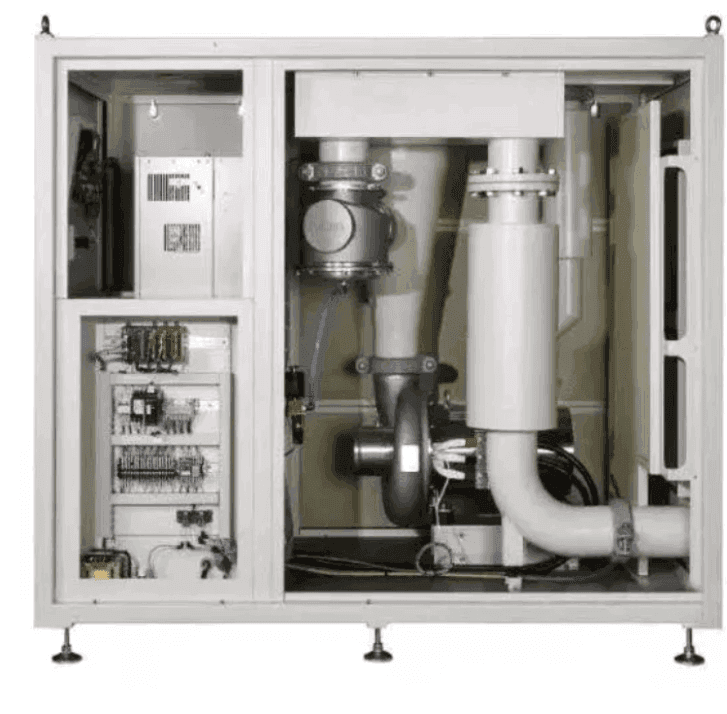
Air Suspension Blowers Product Information
Web: http://www.greentechblower.com (Group Web) ‖ http://www.zqblower.cn (Chinese) ‖ http://www.ringblower.cn/ (Ring blower) ‖ http://www.china-blower.com (Roots Blower) ‖ https://www.zibovacuumpump.com (Vacuum Pump)