
Environmental Aerodynamics: Barometric Pressure Compensation and Ambient Adaptability in Maglev Turb
Post time: 2026-10-23 10:43:33
For EPC contractors, municipal utility directors, and global engineering consultants, designing industrial aeration systems for non-standard atmospheric conditions presents complex aerodynamic challenges. Standard blower performance curves are traditionally calculated under standard temperature and pressure (STP) reference baselines—typically at sea level with mild ambient temperatures and low relative humidity. However, real-world industrial installations rarely enjoy these idealized lab conditions.
Deploying high-speed turbomachinery in high-altitude mining sites, arid desert regions subject to extreme thermal spikes, or high-humidity tropical coastal zones fundamentally alters air density. Because centrifugal compression is inherently dependent on fluid density, uncompensated environmental shifts cause volumetric flow deviations, motor thermal overload, or insufficient oxygen mass transfer in biological basins. Drawing from decades of frontline field engineering across extreme global climate zones, our technical teams have mastered adaptive fluid-control strategies. Let us examine the technical mechanisms that allow modern maglev turbo blowers to automatically compensate for barometric variations and maintain steady, predictable process performance anywhere on earth.
The Atmospheric Challenge: How Air Density Shifts Impact Centrifugal Compression
When ambient conditions deviate from standard sea-level baselines, the volumetric and mass flow characteristics of high-speed turbomachinery experience direct physical shifts that must be managed dynamically.
High-Altitude Low-Pressure Volumetric Loss: At elevated altitudes, lower barometric pressure reduces intake air density, requiring higher rotational velocities and adjusted impeller pressure ratios to deliver the equivalent oxygen mass flow needed for biological treatment.
Thermal Density Degradation in Extreme Heat: High ambient operating temperatures expand air molecules, lowering air density and forcing variable frequency drives to adjust motor frequencies to prevent volumetric output drop-offs.
Humidity Displacement and Mass Flow Compensation: Extreme relative humidity introduces gaseous water vapor into incoming air streams, displacing oxygen molecules per cubic meter and requiring real-time mass flow correction to sustain constant dissolved oxygen levels in process basins.
Expert Q&A: Environmental Aerodynamics and Real-Time Compensation Mechanics
Q1: How do integrated environmental sensors allow a maglev turbo blower to automatically auto-correct its performance map?
Answer: Modern intelligent maglev turbo blowers feature multi-variable ambient sensing arrays integrated directly into their inlet filtration housing. These arrays continuously measure barometric static pressure, ambient air temperature, and relative humidity. The master digital controller processes these live environmental parameters in real time, calculating instant air density shifts and dynamically adjusting the variable frequency drive's output frequency. By automatically modifying rotational velocity to match the exact density curve, the blower maintains true mass flow output rather than uncompensated volumetric flow, protecting biological aeration processes from oxygen starvation during severe weather shifts.
Q2: What specialized engineering configurations protect high-speed impellers operating in high-altitude or desert environments?
Answer: Operating in high-altitude or desert environments involves dealing with low air density, fine silica dust, and rapid diurnal temperature swings. To protect precision aerodynamic components, high-efficiency maglev turbo blowers incorporate specialized multi-stage intake filtration packages equipped with hydrophobic pre-filters and micro-dust cartridged elements. Additionally, the 3D-contoured titanium impellers receive specialized anti-erosion nanocoatings that prevent microscopic particle impingement from altering blade surface roughness, ensuring the machine preserves its elite polytropic efficiency throughout decades of harsh continuous duty.
Q3: Why do active magnetic bearings perform exceptionally well in high-humidity and tropical coastal installations?
Answer: Traditional mechanical bearings operating in warm, highly humid coastal environments suffer from chronic oil contamination, water emulsification, and condensation accumulation in oil sumps, leading to rapid bearing corrosion and seal degradation. Active magnetic bearings suspend the spinning rotor entirely within a contactless electromagnetic field inside a sealed, IP-rated enclosure. Because there are zero lubricating fluids, oil sumps, or mechanical contact seals, humidity cannot degrade bearing performance, ensuring rock-solid mechanical stability even in 100% relative humidity coastal settings.
Frequently Asked Questions on Environmental Adaptation
1. How does high altitude impact the cooling efficiency of high-speed blower motors?
Thinner air at high altitudes reduces convective heat dissipation capacity across air-cooled motor housings. To counteract this, modern maglev turbo blowers intended for high-altitude deployment utilize liquid-cooled stator jackets or oversized internal cooling fans, keeping stator winding and permanent magnet thermal profiles well within safe operational limits.
2. Can a maglev turbo blower calibrated for sea-level operation be relocated to a high-altitude facility?
Yes. Because the system's operational parameters are governed by digital control algorithms and variable frequency drive modulation rather than fixed mechanical gearing, engineers can update the machine's software site elevation profile and recalibrate its density auto-correction parameters during on-site re-commissioning.
3. What telemetry metrics should operators track during seasonal climate transitions?
Plant operators should monitor real-time inlet air density calculations, motor operating frequency, inverter thermal profiles, and mass flow output via the digital control interface to confirm that the blower's adaptive compensation loops are smoothly offsetting seasonal temperature and barometric pressure shifts.
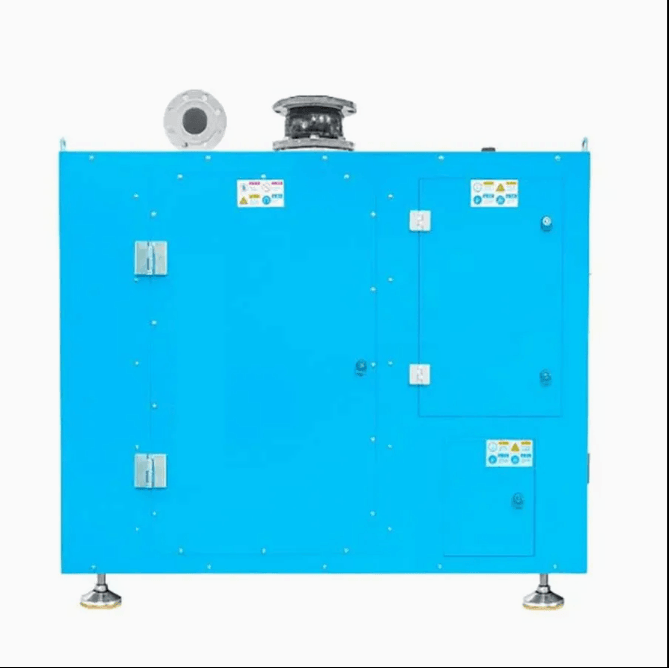
Maglev Turbo Blowers Product Information
Web: http://www.greentechblower.com (Group Web) ‖ http://www.zqblower.cn (Chinese) ‖ http://www.ringblower.cn/ (Ring blower) ‖ http://www.china-blower.com (Roots Blower) ‖ https://www.zibovacuumpump.com (Vacuum Pump)