
Demystifying the Financial Ledger: A CFO’s Guide to Total Cost of Ownership (TCO) for Maglev Turbo B
Post time: 2026-09-24 10:06:43
When corporate executive boards, chief financial officers, and plant directors review capital expenditure requests for industrial facility upgrades, initial equipment purchase pricing often commands the center of attention. However, seasoned engineering procurement specialists know that the sticker price represents only a fraction of a machine's true financial footprint. For continuous-duty utility assets like aeration blowers and pneumatic conveying systems, over eighty percent of the total cost of ownership (TCO) accumulates during the operational phase through electricity consumption and ongoing maintenance overheads.
Drawing from decades of field engineering and financial auditing across municipal wastewater plants and heavy industrial facilities, our technical teams have tracked the long-term economic performance of thousands of installations. When evaluating asset modernization, transitioning from legacy positive displacement or multi-stage centrifugal blowers to advanced maglev turbo blowers fundamentally reshapes the financial ledger. Let us examine the economic mechanics that drive massive TCO reductions and accelerate capital investment payback.
Beyond the Purchase Price: Unpacking the Hidden Costs of Legacy Industrial Blowers
To understand the financial justification for upgrading to modern turbomachinery, leadership teams must audit the cumulative costs embedded in legacy equipment operations.
· The Constant Drain of Inefficient Power Consumption: Traditional blowers run twenty-four hours a day, drawing heavy electrical currents. Internal mechanical friction, airflow throttling losses, and motor slip convert valuable electricity into wasted heat rather than useful process air.
· The Accumulation of Routine Maintenance Overheads: Legacy machines require frequent oil changes, filter replacements, belt adjustments, bearing overhauls, and seal replacements. Each service interval incurs direct labor costs, material expenses, and the hidden financial loss of temporary operational downtime.
· The Risk of Catastrophic Failure Liabilities: Aging mechanical components operating under intense thermal and physical stress carry a persistent risk of unexpected breakdown, leading to emergency repair expenses and potential environmental compliance penalties.
The Dual-Savings Engine: How Energy Efficiency and Zero Maintenance Redefine TCO
Adopting direct-drive magnetic levitation technology attacks financial inefficiencies at their source, creating a powerful dual-savings model that significantly lowers operating expenditures.
Quantifying Electrical Power Reductions
By coupling high-frequency permanent magnet synchronous motors directly with 3D-contoured impellers and high-frequency variable frequency drives, maglev turbo blowers eliminate mechanical transmission losses. Field performance data across diverse municipal and industrial sites demonstrates consistent electrical consumption reductions ranging from 30% to 40% compared to legacy blowers. Because electricity represents the largest recurring expense in blower operation, shaving nearly half off the power bill creates immediate, compounding cash flow benefits.
Eradicating Lubrication and Overhaul Overheads
Active magnetic levitation suspends the rotating assembly entirely in a controlled electromagnetic field, creating absolute zero mechanical contact during operation. This frictionless design completely eliminates lubricating oils, gearboxes, sliding bearings, and mechanical seals. Facility maintenance teams are permanently relieved from routine overhauls, oil disposal fees, and unexpected mechanical repair bills, reducing ongoing maintenance overheads to simple, low-cost inlet air filter inspections.
Evaluating Capital Payback and Long-Term Investment Returns
Securing capital budget approval requires clear, transparent payback modeling that demonstrates how premium efficiency translates into rapid financial recovery.
When financial analysts calculate total cost of ownership over a ten-to-twenty-year operational lifespan, the initial capital investment of a maglev turbo blower is typically recovered through combined energy savings and maintenance elimination within two to three years. Furthermore, because active magnetic bearings eliminate mechanical wear, the machine maintains peak thermodynamic efficiency year after year without performance degradation, ensuring that financial savings continue long after the initial capital expenditure has been fully amortized.
Frequently Asked Questions on Maglev Blower Financial Economics
1. How is the capital payback period typically calculated for a maglev turbo blower upgrade?
Payback period is evaluated by comparing the total annual operating cost of existing legacy blowers—accounting for actual kilowatt-hour consumption, peak tariff rates, and historical maintenance expenses—against the projected operational costs of the new maglev turbo system. In most continuous-duty industrial applications, cumulative savings achieve full capital recovery within twenty-four to thirty-six months.
2. What hidden maintenance expenses are completely eliminated with contactless technology?
Switching to an oil-free maglev system eliminates lubricating oil purchases, hazardous fluid disposal fees, belt replacements, mechanical seal overhauls, gearbox inspections, and the labor costs associated with periodic mechanical rebuilds.
3. How do fluctuating utility tariffs impact the long-term TCO calculation of a maglev blower?
When regional electrical tariffs increase, inefficient legacy blowers experience an amplified financial penalty due to their high power draw. High-efficiency maglev turbo blowers insulate facility budgets from rising energy costs by consuming significantly fewer kilowatt-hours per unit of airflow delivered, providing crucial long-term financial protection against energy market volatility.
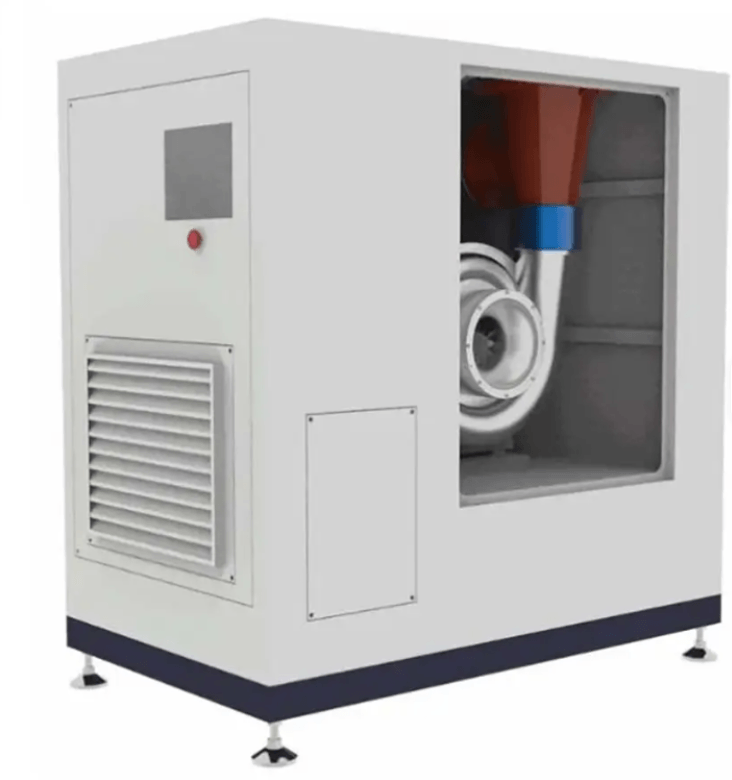
Maglev Turbo Blowers Product Information
Web: http://www.greentechblower.com (Group Web) ‖ http://www.zqblower.cn (Chinese) ‖ http://www.ringblower.cn/ (Ring blower) ‖ http://www.china-blower.com (Roots Blower) ‖ https://www.zibovacuumpump.com (Vacuum Pump)