
Precision Process Matching: A Comprehensive Selection and Performance Matrix for LZ Series Maglev Tu
Post time: 2026-09-18 13:33:39
When designing municipal wastewater treatment plants, industrial fermentation systems, or large-scale pneumatic conveying networks, selecting the optimal blower configuration is critical to achieving long-term energy efficiency and low lifecycle operating costs (TCO). Traditional equipment sizing relies on static approximations, but modern high-efficiency facilities demand precise multi-variable matching encompassing rated power, pressure differentials (kPa), and inlet airflow capacities ($m^3/min$).
Based on the official LZ series maglev turbo blower selection matrix, this guide provides engineering procurement teams and plant operators with a structured performance reference to streamline equipment selection and ensure optimal aerodynamic alignment.
LZ Series Maglev Turbo Blower Performance Selection Matrix
The LZ series covers a comprehensive power spectrum from 37 kW to 350 kW, utilizing advanced variable frequency drive modulation and active magnetic levitation to deliver stable airflow across diverse pressure requirements.
Product Series | Rated Power (kW) | Max Pressure Rating (kPa) | Airflow Range (m3/min) | Primary Industrial Application |
LZ037 Series | 37 | 40 to 80 | 25.0 to 50.0 | Compact package wastewater treatment, small municipal biological basins |
LZ055 Series | 55 | 50 to 90 | 30.0 to 68.0 | Municipal wastewater aeration, industrial effluent treatment |
LZ075 Series | 75 | 40 to 85 | 52.0 to 94.0 | Biological nutrient removal, medium-capacity pneumatic transport |
LZ090 Series | 90 | 70 to 90 | 55.0 to 71.0 | Continuous industrial fermentation, dedicated aeration lines |
LZ110 Series | 110 | 40 to 120 | 45.0 to 139.0 | Municipal wastewater plants, chemical oxidation processing |
LZ150 Series | 150 | 40 to 120 | 68.0 to 220.0 | Large municipal aeration grids, high-load material transfer |
LZ220 Series | 220 | 40 to 120 | 99.0 to 303.0 | Heavy industrial pneumatic conveying, large-scale municipal aeration |
LZ300 Series | 300 | 80 to 120 | 135.0 to 260.0 | Ultra-large municipal treatment plants, central air supply headers |
LZ350 Series | 350 | 60 to 100 | 179.0 to 301.0 | High-flow industrial processing, heavy municipal environmental projects |
How to Utilize the Selection Matrix for Plant Engineering Design
Proper utilization of the performance matrix prevents both energy-wasting oversizing and process-compromising undersizing during plant engineering design phases.
1. Establish Baseline Process Requirements
Begin by calculating the exact operating pressure required to overcome basin water depth, diffuser resistance, and piping friction losses, measured in kilopascals (kPa). Concurrently, determine the required mass flow or volumetric airflow capacity based on biological oxygen demand (BOD) or material transfer rates.
2. Cross-Reference Power and Operating Islands
Locate the intersection of your required pressure and airflow within the operational grid. For instance, an application requiring approximately 70 $m^3/min$ at 80 kPa can be evaluated across multiple power tiers, allowing engineers to balance initial capital expenditure against long-term wire-to-water efficiency.
3. Leverage Wide Turndown Flexibility
Because LZ series blowers feature contactless active magnetic bearings and high-speed permanent magnet motors, they maintain exceptional aerodynamic stability across wide turndown ratios. This ensures that when biological loads fluctuate between day and night shifts, the blower scales speed smoothly without risking surge conditions.
Frequently Asked Questions on LZ Series Selection
1. What do the alphanumeric model designations (such as LZ075B80) signify?
The prefix indicates the product line and motor power (e.g., LZ075 represents a 75 kW system), while the suffix letter and number combination (such as B80) denotes the optimized maximum pressure rating in kilopascals for that specific aerodynamic configuration.
2. How are performance adjustments handled if an application falls between standard matrix values?
Because the variable frequency drive allows infinite speed adjustment within safe operational margins, intermediate performance points can be achieved seamlessly. Technical engineering teams can generate customized performance curves for specific site conditions upon request.
3. What telemetry parameters should be monitored to ensure the selected blower operates within design limits?
Plant operators should continuously track motor frequency, active magnetic bearing levitation currents, internal stator temperatures, and inlet air filter differential pressure via the digital control interface to guarantee sustained peak performance.
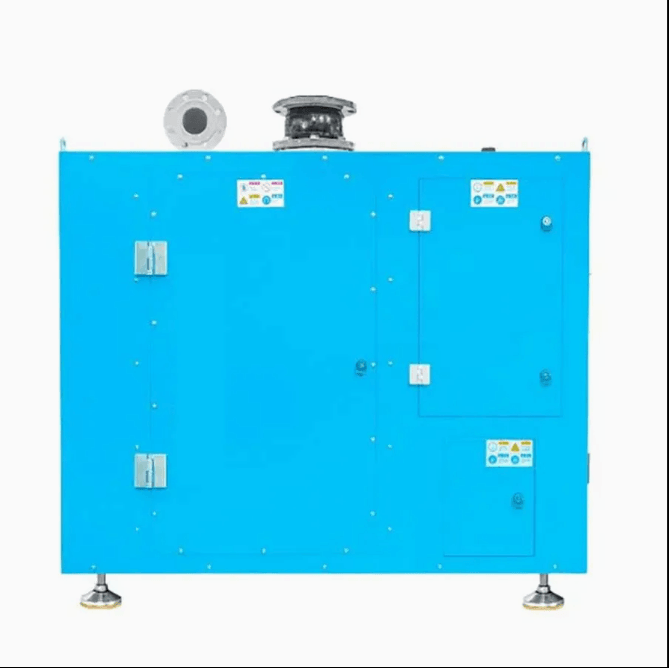
Maglev Turbo Blowers Product Information
Web: http://www.greentechblower.com (Group Web) ‖ http://www.zqblower.cn (Chinese) ‖ http://www.ringblower.cn/ (Ring blower) ‖ http://www.china-blower.com (Roots Blower) ‖ https://www.zibovacuumpump.com (Vacuum Pump)