
Securing Smart Industrial Aeration: OT Cybersecurity and Edge Resilience for Maglev Turbo Blowers
Post time: 2026-10-26 13:33:30
As municipal wastewater treatment plants and heavy industrial facilities accelerate their transition toward automated, lights-out operations, plant-wide digital connectivity has become standard practice. High-speed industrial assets like maglev turbo blowers no longer operate as isolated mechanical islands; instead, they function as smart, networked nodes communicating continuously with central supervisory control and data acquisition (SCADA) systems, cloud analytics platforms, and remote engineering workstations.
However, this convergence of operational technology (OT) and information technology (IT) significantly expands the digital attack surface. For plant directors and automation engineers, protecting continuous-duty aeration infrastructure from unauthorized access, packet injection, and malware infiltration is now just as critical as maintaining mechanical durability. Drawing from decades of frontline field integration experience across global industrial utility networks, our technical teams have established a rigorous cybersecurity resilience framework. Let us explore the core engineering principles required to secure smart maglev turbo blower networks against modern industrial threats.
Core Pillars of Operational Technology Security in Turbo Blowers
To maintain absolute process continuity and protect critical infrastructure from malicious intrusion, industrial automation architectures must incorporate robust, multi-layered defensive controls.
Encrypted Industrial Protocol Transmission: Securing Modbus TCP, Profinet, and OPC UA communications against unauthorized packet injection or man-in-the-middle manipulation across plant-wide SCADA infrastructures.
Air-Gapped Edge Controller Integrity: Implementing secure bootloader firmware and hardware-based cryptographic chips to safeguard local industrial microprocessors from unauthorized firmware tampering or unauthorized code execution.
Autonomous Fail-Safe Interlocks: Ensuring that local hardware safety loops remain completely independent and fully functional even if upper-level corporate network connectivity or remote telemetry is disrupted.
Expert Q&A: Protecting Smart Blower Networks at the OT Edge
Q1: Why are connected industrial blowers vulnerable to IT-originated cyber threats, and how is lateral movement prevented?
Answer: Historically, operational technology networks operated in complete physical isolation from enterprise corporate networks. As plants integrate cloud analytics and remote monitoring dashboards, poorly segmented networks create pathways for attackers who breach corporate IT environments to move laterally into sensitive industrial control zones. Modern maglev turbo blower control cabinets combat this vulnerability by incorporating hardware-enforced industrial firewalls and strict zone-and-conduit segmentation models compliant with IEC 62443 standards. These barriers isolate the blower's internal control processors from enterprise office networks while permitting authenticated, encrypted telemetry exchange.
Q2: What role do hardware-based cryptographic chips play in safeguarding local edge controllers?
Answer: Industrial edge controllers manage high-speed motor frequencies, active magnetic bearing levitation, and rapid response safety valves. To prevent malicious actors from flashing compromised firmware or injecting malicious code into the local programmable logic controller, advanced maglev blowers integrate trusted platform module (TPM) cryptographic microchips. During every system startup, the secure bootloader verifies digital signatures across all firmware layers, ensuring that the machine will instantly halt initialization if any unauthorized code modification is detected.
Q3: How do autonomous hardware safety interlocks protect the blower if network communication fails entirely?
Answer: In the event of a severe cyber incident or a severed network cable, software commands from the central control room may become unavailable. To ensure uncompromised safety, maglev turbo blowers utilize hardwired, independent safety instrumented systems. These local hardware loops rely on dedicated sensors and electromechanical relays that operate completely independently of the Ethernet communication layer, allowing the machine to execute safe shutdown or ride-through protocols autonomously without depending on remote network signals.
Frequently Asked Questions on Industrial Blower Cybersecurity
1. Can legacy SCADA networks be retrofitted with modern cybersecurity modules for existing maglev blowers?
Yes. Plant engineers can deploy industrial security gateways and protocol proxies upstream of existing blower control cabinets. These devices inspect incoming traffic packets, block unauthorized IP addresses, and encrypt older unencrypted industrial protocols without requiring a complete overhaul of the blower's internal electronics.
2. How do secure remote vendor access tools protect plant operations during routine maintenance?
Leading industrial blower architectures replace insecure, permanent remote-access VPNs with zero-trust, policy-enforced remote connection portals. These portals require multi-factor authentication, restrict sessions to strict time-bound windows, and log all engineering modifications, eliminating unmonitored third-party entry points.
3. What diagnostic telemetry should plant cybersecurity teams monitor to detect early signs of network intrusion?
Security teams should continuously monitor network traffic anomalies, unexpected configuration changes on local programmable logic controllers, unauthorized login attempts at the local human-machine interface (HMI), and unexpected alterations in motor frequency command patterns via passive industrial intrusion detection systems.
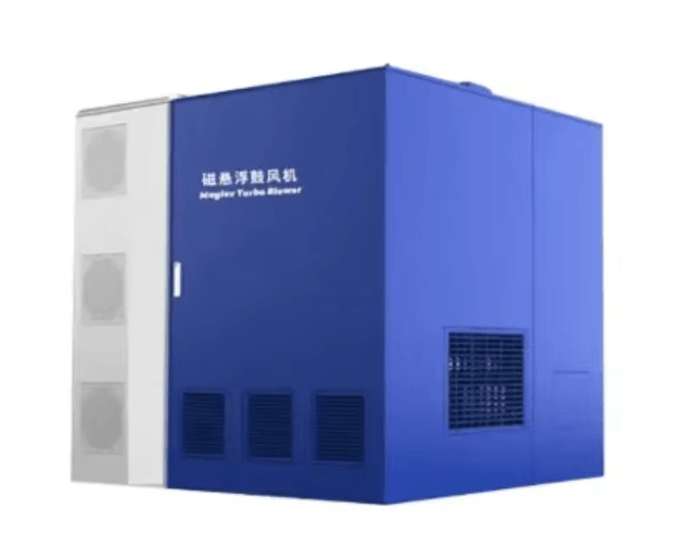
Maglev Turbo Blowers Product Information
Web: http://www.greentechblower.com (Group Web) ‖ http://www.zqblower.cn (Chinese) ‖ http://www.ringblower.cn/ (Ring blower) ‖ http://www.china-blower.com (Roots Blower) ‖ https://www.zibovacuumpump.com (Vacuum Pump)