
Smart SCADA Integration: Automating Aeration Efficiency with Maglev Turbo Blowers
Post time: 2026-10-22 15:34:55
For municipal water treatment plant directors and industrial automation engineers, optimizing energy consumption while maintaining strict dissolved oxygen compliance is a continuous balancing act. Traditional wastewater aeration systems often rely on manual valve adjustments or disjointed control loops, leading to energy waste, unstable biological treatment conditions, and delayed responses to sudden organic loading shifts.
As industrial facilities accelerate their transition toward fully automated, lights-out operations, integrating high-speed turbomachinery into centralized supervisory control and data acquisition (SCADA) networks has become an engineering priority. Drawing from decades of frontline field commissioning, industrial automation design, and system integration experience across global municipal projects, our technical teams have observed how intelligent digital orchestration transforms fluid delivery. Let us examine the technical mechanisms and system integration strategies that allow modern maglev turbo blowers to achieve complete autonomous operational harmony.
The Digital Core: Integrating High-Speed Turbomachinery into Plant SCADA Networks
Connecting advanced air-delivery assets to plant-wide supervisory networks requires robust, standardized communication protocols and precise signal mapping.
Standardized Industrial Protocol Integration: Modern maglev turbo blowers support open, high-speed industrial communication protocols—such as Modbus TCP, Profinet, and Ethernet/IP—allowing seamless bidirectional data exchange between the blower's internal programmable logic controllers and central plant SCADA platforms.
Closed-Loop Dissolved Oxygen Feedback Loops: By linking inline biological basin dissolved oxygen sensors directly to the blower master controller, the system automatically modulates variable frequency drive output in real time, scaling air mass flow instantly to match shifting biological oxygen demand without human intervention.
Comprehensive Telemetry Streaming: Central control dashboards continuously track hundreds of live operational parameters, including motor inverter frequency, bearing levitation currents, stator temperatures, and mass flow output, providing operators with absolute transparency and historical audit trails.
Expert Q&A: Unlocking Automated Aeration Optimization
Q1: How do automated PID control loops prevent biological over-aeration during low-load nocturnal cycles?
Answer: During nighttime hours when municipal wastewater inflow drops, biological oxygen demand decreases significantly. Instead of maintaining a fixed high-speed operating setpoint that wastes massive amounts of electrical energy, the plant SCADA system utilizes advanced proportional-integral-derivative (PID) control loops. These loops continuously analyze real-time dissolved oxygen feedback from the aeration tanks and send instantaneous, smooth frequency reduction commands to the maglev turbo blower's variable frequency drive, lowering airflow output while keeping dissolved oxygen concentrations perfectly within target compliance limits.
Q2: What cybersecurity safeguards protect cloud-connected industrial blower networks from external vulnerabilities?
Answer: Integrating industrial machinery into supervisory networks requires multi-layered cybersecurity defense architectures. Leading maglev blower systems incorporate hardware-based firewalls, encrypted communication tunnels, and isolated industrial network segments. These safeguards prevent unauthorized external access while ensuring that internal telemetry and control commands stream safely and reliably between the local blower controller and the plant control room.
Q3: How does automated fault-masking prevent nuisance alarms and false system trips?
Answer: In complex industrial environments, electrical noise or momentary sensor signal jitter can trigger false alarms in legacy control systems. Modern maglev blowers utilize intelligent digital signal processing and programmable time-delay filters. These micro-processors cross-check telemetry channels in milliseconds, isolating transient signal anomalies and executing automated error correction without triggering unnecessary equipment shutdowns or disrupting continuous plant operations.
Frequently Asked Questions on Blower Automation
1. Can existing legacy municipal SCADA systems communicate with modern maglev turbo blowers?
Yes. Because modern maglev blower controllers feature modular communication gateways supporting legacy and modern industrial protocols alike, system integrators can map input/output registers smoothly into existing plant supervisory networks without requiring complete control system overhauls.
2. What are the primary financial benefits of transitioning from manual blower adjustments to automated SCADA control?
Automating aeration control eliminates human response latency and prevents chronic over-aeration. This precision matching of airflow to actual biological demand typically slashes facility energy consumption by an additional 10% to 15% on top of the core efficiency gains provided by magnetic levitation technology.
3. How do plant operators verify the accuracy of automated feedback telemetry during routine audits?
Operators can cross-reference digital SCADA dashboard readouts against physical, calibrated secondary instruments—such as portable dissolved oxygen meters and thermal mass flow verification gauges—during scheduled monthly maintenance walkthroughs to ensure long-term telemetry precision.
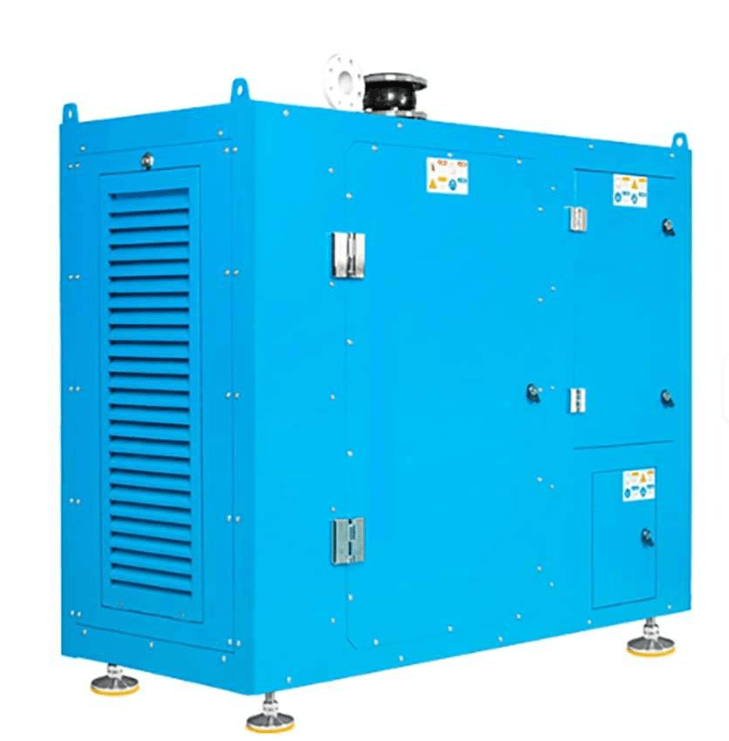
Maglev Turbo Blowers Product Information
Web: http://www.greentechblower.com (Group Web) ‖ http://www.zqblower.cn (Chinese) ‖ http://www.ringblower.cn/ (Ring blower) ‖ http://www.china-blower.com (Roots Blower) ‖ https://www.zibovacuumpump.com (Vacuum Pump)