
Key Considerations for Selecting Air Suspension Centrifugal Blowers for Wastewater Treatment Project
Post time: 2026-10-21 14:02:41
Air suspension centrifugal blowers are widely used in biological aeration systems at wastewater treatment plants due to their high energy efficiency, low noise levels, and reduced maintenance requirements. Proper selection affects not only the stability of air supply but also wastewater treatment performance, operating energy consumption, and the total life cycle cost of the equipment. Therefore, actual operating conditions should be carefully evaluated during project design and equipment procurement.
1. Identify the Actual Requirements of the Wastewater Treatment Project
1.1 Determine the Required Airflow and Pressure
Airflow and pressure are the core parameters in blower selection. For wastewater treatment projects, the required total airflow and operating pressure should be calculated based on treatment capacity, wastewater quality, aeration tank volume, dissolved oxygen requirements, and aeration equipment resistance.
Pressure losses along pipelines, local resistance, diffuser resistance, and changes in operating conditions should also be considered. Insufficient airflow may affect biological treatment performance, while oversized blowers can lead to unnecessary energy consumption.
1.2 Consider Variations in Operating Load
Influent volume, water quality, and pollutant concentrations at wastewater treatment plants may fluctuate with seasonal changes and production conditions, resulting in variations in aeration demand. During selection, the maximum, average, and minimum air requirements should be identified to ensure stable operation under different loads.
2. Evaluate the Performance Parameters of Air Suspension Centrifugal Blowers
2.1 Assess Blower Efficiency and Energy-Saving Performance
Air suspension centrifugal blowers typically use high-speed motors, air bearings, and variable-frequency control technology. These features help reduce mechanical friction losses and maintenance requirements. However, products differ in aerodynamic design, motor efficiency, and control strategies.
During procurement, priority should be given to the overall efficiency at the actual operating point rather than the maximum efficiency or rated power alone. Annual operating hours should also be considered when estimating energy savings and the investment payback period.
2.2 Verify the Operating Range and Stability
The blower should provide sufficient adjustment capability to match the requirements of the wastewater treatment system and regulate airflow according to dissolved oxygen demand. Important factors include the minimum stable airflow, turndown range, surge protection, and variable-frequency control performance.
These factors help prevent frequent starts and stops or unstable operation under low-load conditions.
3. Consider Site Conditions and System Compatibility
3.1 Evaluate the Installation Environment and Cooling Conditions
Wastewater treatment plants often have high humidity, potentially corrosive gases, and significant ambient temperature variations. During selection, verify the blower's permissible ambient temperature range, enclosure protection rating, inlet filtration requirements, and heat dissipation conditions.
Proper ventilation in the equipment room, suitable air inlet positioning, and adequate maintenance space can reduce the impact of high temperatures, dust, and moisture on equipment performance.
3.2 Check Pipeline and Electrical System Compatibility
Blower selection should be coordinated with the aeration pipeline network, valves, check valves, and control systems. Pipeline pressure losses, power supply capacity, starting methods, automatic control interfaces, and standby equipment requirements should be checked to ensure reliable system integration.
4. Compare Procurement Costs and After-Sales Service
4.1 Focus on Total Life Cycle Cost
Equipment should not be selected solely on its initial purchase price. Electricity consumption, maintenance expenses, replacement part costs, and expected service life should also be considered.
For wastewater treatment plants operating continuously over long periods, energy consumption represents a significant operating expense. Therefore, overall economic performance under actual operating conditions should be a key selection criterion.
4.2 Verify the Supplier's Technical Support Capabilities
Before purchasing, confirm whether the supplier can provide selection calculations, performance curves, installation guidance, commissioning services, and troubleshooting support. Spare parts availability, warranty coverage, and local service capabilities should also be evaluated to reduce future maintenance risks.
5. Conclusion
Selecting an air suspension centrifugal blower for a wastewater treatment project requires an assessment of actual airflow and pressure requirements, operating efficiency, load adjustment capabilities, site conditions, system compatibility, and total life cycle cost.
Scientific selection and proper system configuration can improve aeration system stability, reduce long-term energy consumption, and support efficient, energy-saving, and reliable wastewater treatment operations.
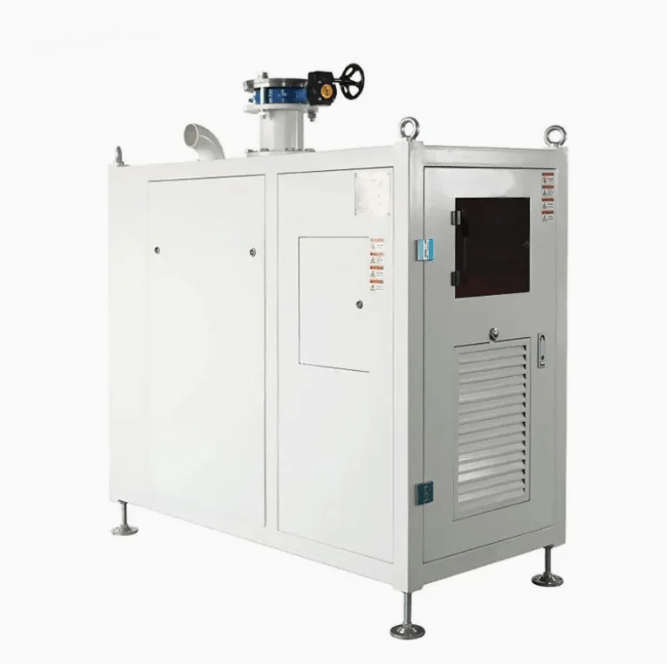
Air Suspension Blowers Product Information
Web: http://www.greentechblower.com (Group Web) ‖ http://www.zqblower.cn (Chinese) ‖ http://www.ringblower.cn/ (Ring blower) ‖ http://www.china-blower.com (Roots Blower) ‖ https://www.zibovacuumpump.com (Vacuum Pump)